Fresh mango preparation & pulp recovery
Washing, inspection, stone/flesh separation and refining, followed by the selected endpoint.
Connect fruit-specific preparation to selected pulping, transfer, treatment and bulk-packing equipment. Start with whole fruit, an existing pulp stream or one machine.
Agree the material handed to the common section before selecting shared equipment.
Scroll across the table to compare the handoff conditions.
| Fruit | Preparation decision | Handoff to the pulp section |
|---|---|---|
| Mango | Stone and peel separation; flesh recovery | Prepared flesh with the hard-stone boundary resolved |
| Guava | Inspection and seed separation; assess stone-cell texture | Prepared stream with the required seed and texture limits |
| Papaya | Peel and cavity-seed removal; gentle flesh handling | Prepared flesh without peel or cavity seeds |
| Banana | Peeling and preparation of the selected ripe fruit | Peeled feed under a defined time and temperature history |
Prepared streams can share a section only where the selected passages, screens, transfer and process duty suit each fruit.
Match stages and screens to the accepted pulp and reject fractions.
Pulping equipmentDefine the pump, useful vessel volume and condition at the next inlet.
Transfer and bufferConnect the selected product process to the required bulk package.
Treatment packageRecord product removal, part changes, cleaning and the next-fruit release.
Changeover boundariesThe fresh-mango route remains a defined example of stone and flesh recovery. A prepared-pulp package begins after fruit preparation and includes only the selected downstream duties.
Compare line boundariesInspect the equipment families, then discuss the configuration and material at each connection.
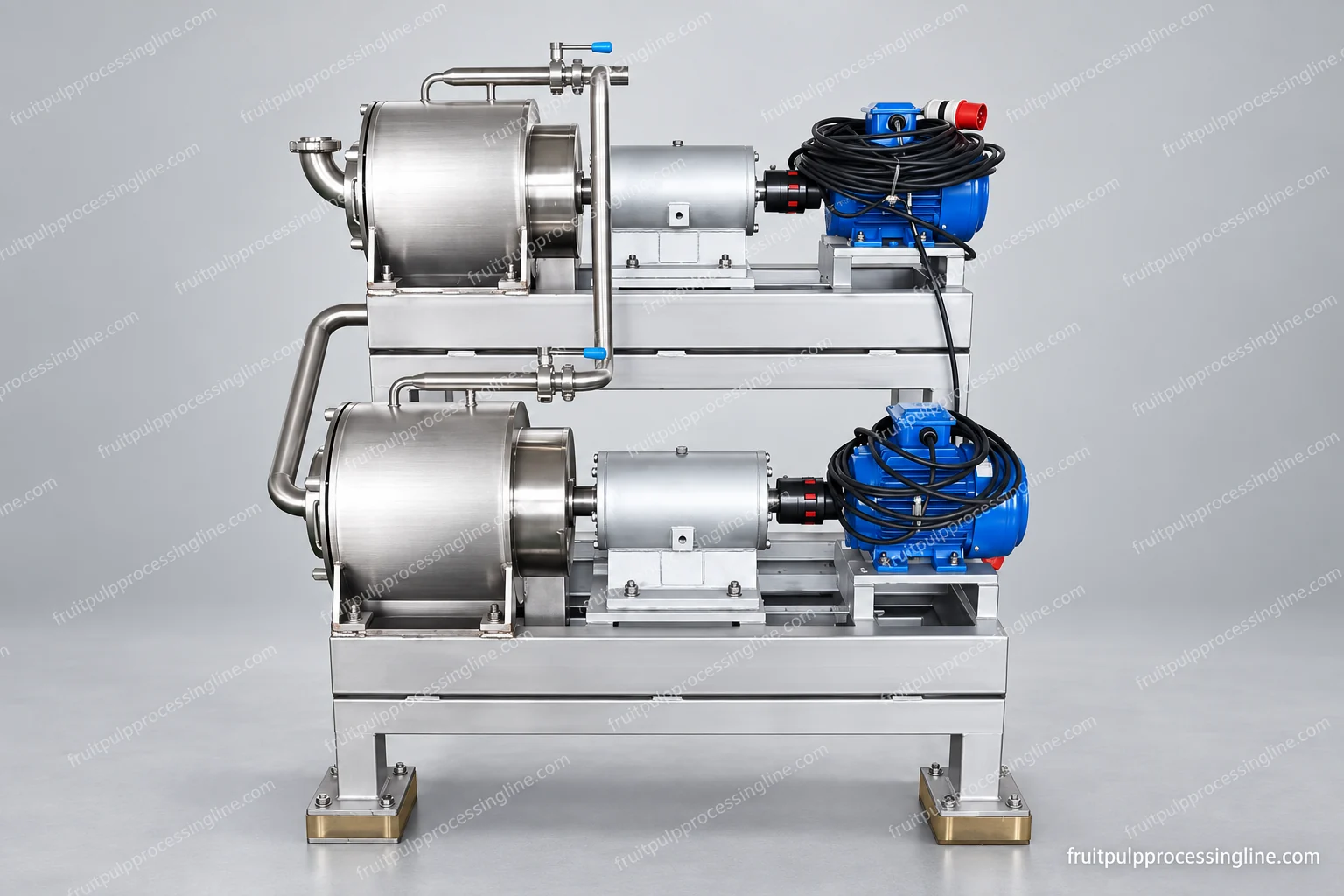
Two driven cylindrical stages recover pulp from suitable prepared fruit and refine the accepted fraction to the selected screen arrangement.
View machine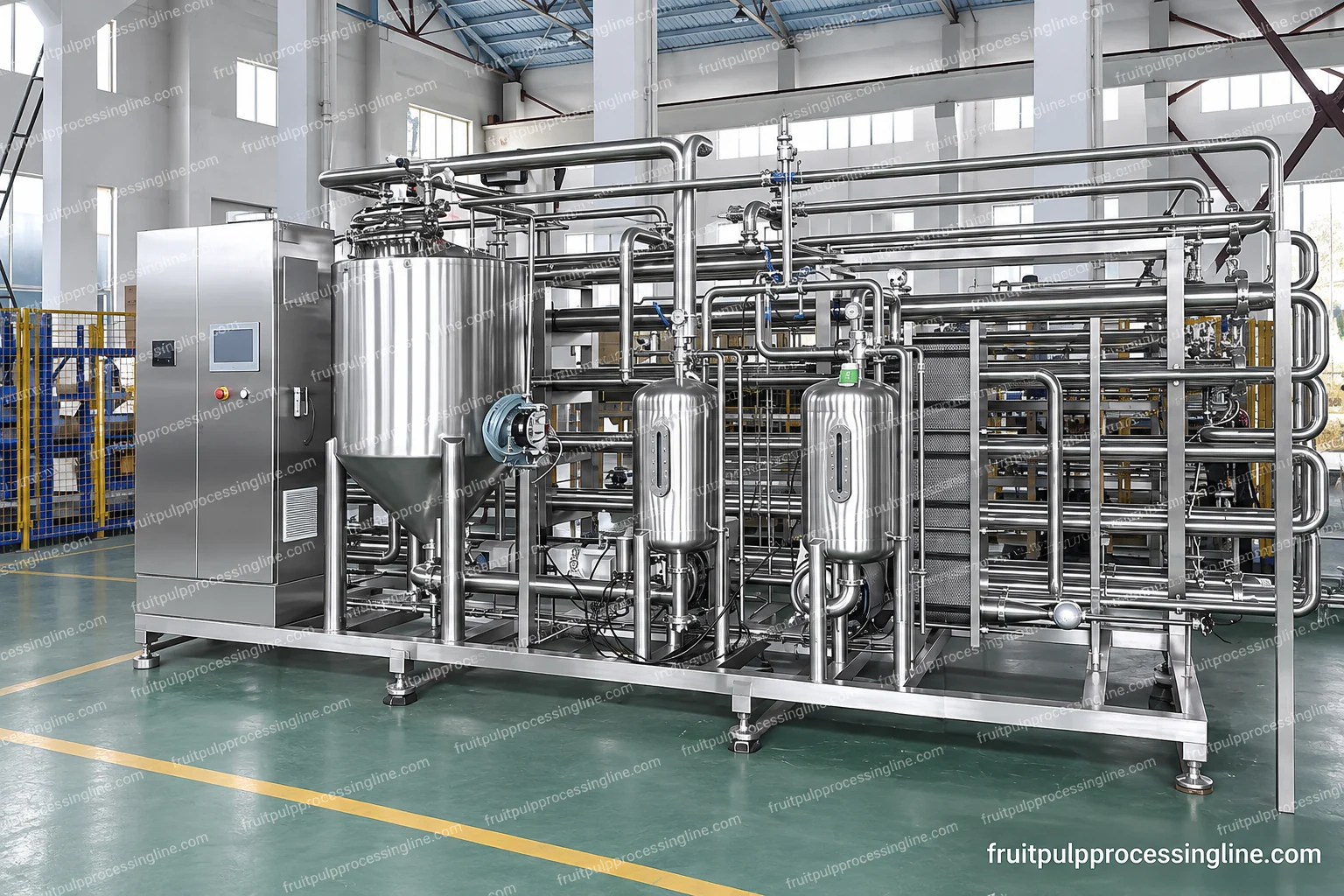
A tube-in-tube thermal family brings a suitable fruit pulp through a specified heating, holding and cooling route.
View machine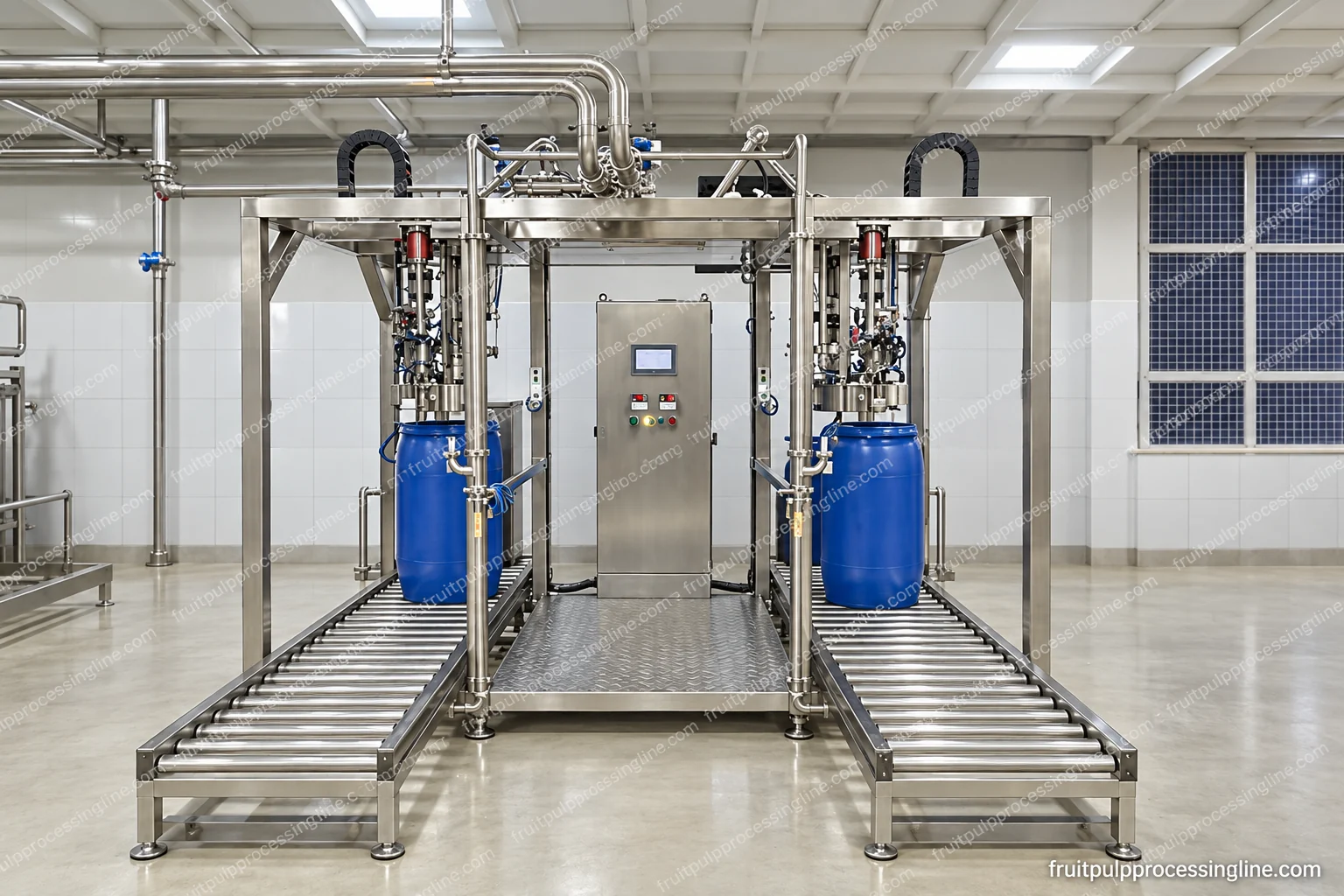
A bag-filling assembly with two positions and drum-handling lanes connects treated pulp to its selected bulk package.
View machineKeep input, accepted pulp, rejects and operating time on one boundary. The blank worksheet and campaign planner help retain those observations for the equipment review.
Tell us about the equipment or product you have in mind.